
Table of Contents
- Why Does My Beard Itch When It Grows?
- Step 1: Wash Your Beard Without Stripping It
- Step 2: Exfoliate to Clear Buildup and Ingrown Hairs
- Step 3: Use Beard Oil for Itchy Skin
- Step 4: Seal in Moisture with Beard Butter or Balm
- How to Get Rid of Beard Dandruff
- Common Mistakes That Keep Your Beard Itchy
- Frequently Asked Questions
Last Updated: September 18, 2026
Why Does My Beard Itch When It Grows?
Beard itch is the irritation that happens when new facial hair pulls moisture from the skin underneath, leaving it dry, tight, and flaky.
The cause is simple. As hair pushes through, it wicks away sebum, the natural oil your skin makes to stay soft. Without that oil, the skin dries out and starts to itch. Cold weather, hot showers, and harsh soaps make it worse.
But not all beard itch is the same, and this is where most advice falls short. There are two broad categories, and they need different fixes.
New-growth itch (the common kind). This shows up in the first two to four weeks of growing a beard, peaks around week two or three, and fades as your skin adjusts and your beard lengthens. It feels like a dry, prickly, tight sensation. It responds to moisture, gentle cleansing, and patience.
Skin-condition itch (the kind product won't fix). This is itch caused by an underlying condition rather than simple dryness. It tends to persist past the starter phase, come and go in flares, and show visible signs. Common culprits include:
- Seborrheic dermatitis. A red, greasy, flaking rash that favors oily zones like the mustache, chin, and the creases beside the nose. Flakes are often yellowish rather than white. It's linked to a yeast that lives on everyone's skin and is managed, not cured, with medicated washes.
- Fungal infections (tinea). Ring-shaped, scaly, itchy patches that can spread. This is contagious and needs a doctor, not a beard oil.
- Contact dermatitis. A reaction to a product, fragrance, or dye. It usually appears where the product touches skin and clears when you stop using it.
- Folliculitis. Infected or inflamed hair follicles that look like small red bumps or pimples at the base of hairs.
A quick way to tell them apart: new-growth itch is dry and diffuse and improves with moisturizing. Condition-related itch is often red, flaky, bumpy, or greasy, may itch worse in specific spots, and does not improve after a week or two of consistent care.

The good news: ordinary new-growth itch is fixable. Below, we'll show you exactly how to stop beard itch with a simple seven-step routine.
A common mistake is reaching for the same shampoo you use on your head. Most of those strip oil fast. The American Academy of Dermatology's skincare guidance explains how harsh cleansers damage the skin barrier, which is exactly what happens under your beard.
Step 1: Wash Your Beard Without Stripping It
Wash your beard two to three times a week, not daily. Overwashing removes the oils your skin needs.
Use a gentle, sulfate-free wash, like our Hair & Beard Shampoo made for facial hair. Harsh detergents leave the skin tight and itchy. Warm water works fine; hot water dries you out.

Here's the routine:
- Wet your beard with warm water
- Apply a small amount of Hair & Beard Shampoo
- Massage it into the skin, not just the hair
- Rinse well and pat dry
Bearded Brother’s Shampoo Hair and Beard is sulfate-free and made with bamboo and panthenol. It cleans without stripping, so your skin stays comfortable.
Step 2: Exfoliate to Clear Buildup and Ingrown Hairs
Exfoliate once or twice a week to remove dead skin and flakes. This clears the path for hair to grow and helps prevent ingrown hairs.
Use a soft boar-bristle brush or your fingertips. Work in small circles against the grain, then smooth everything back down. Be gentle. Scrubbing hard causes more irritation, not less.
A common mistake is skipping this step entirely. Dead skin builds up under the beard, traps oil, and clogs pores. That leads to flakes and itch.
Step 3: Use Beard Oil for Itchy Skin
Beard oil for itchy skin works because it replaces the sebum your skin has lost. It reaches the skin under the hair, where the problem actually starts.
Apply it to a clean, slightly damp beard. Place one to four pumps in your palm, warm it between your hands, then massage it into the skin. Comb through to spread it evenly.
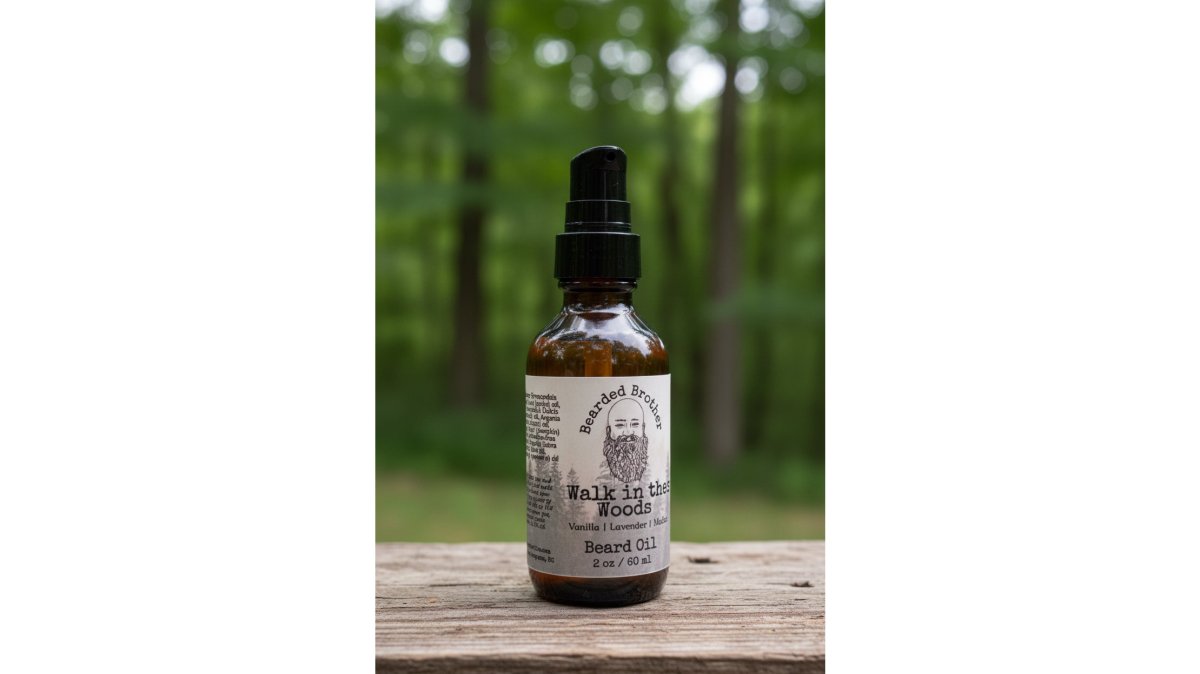
Look for carrier oils like jojoba, argan, and sweet almond. These absorb well and soften coarse hair. Bearded Brother llc's Beard Oil blends jojoba, argan, sweet almond, avocado, and vitamin E. If you have flaky spots, use a little more oil there until they clear up.
Step 4: Seal in Moisture with Beard Butter or Balm
Beard butter locks in the moisture your oil just delivered. Think of oil as the drink and butter as the lid.

Butter is thicker than oil. It conditions deep, softens unruly whiskers, and gives light hold. Balm does the same job with more hold and less shine.
For thick, coarse beards, butter can provide conditioning.
Bearded Brother llc's Beard Butter uses shea butter, almond oil, beeswax, argan oil, jojoba oil, and vitamin E.
How to Get Rid of Beard Dandruff
Beard dandruff, often called beardruff, is flaky skin that sheds from under your beard. The main cause is dry skin, not poor hygiene.
To get rid of beard dandruff:
- Wash less often with a gentle, sulfate-free cleanser
- Apply beard oil daily, focusing on the skin
- Follow with butter to seal in moisture
- Exfoliate several times a week or even daily to lift dead flakes
- Comb out flakes before applying product
Common Mistakes That Keep Your Beard Itchy
Most beard itch comes from a handful of habits. Fix these and the itch usually stops.
- Washing daily with harsh shampoo. Strips oil and dries the skin.
- Skipping the skin under the beard. Product on the hair alone does nothing for itch.
- Using too much product. Clogs pores and causes buildup.
- Scratching instead of moisturizing. Scratching damages the skin barrier and makes itch worse.
- Ignoring hard water. Minerals in hard water leave residue that dries skin and hair. A shower filter can help.
Water quality: the invisible irritant
Hard water carries dissolved minerals, mainly calcium and magnesium (Hardness of Water). When it hits your skin, those minerals can leave a soap-scum residue that disrupts the skin's natural pH and strips oils, leaving a tight, itchy feeling even after you've moisturized. If your taps leave white scale on fixtures or your soap won't lather well, you likely have hard water.
What helps:
- A shower filter designed to reduce minerals and chlorine.
- A final rinse with filtered or distilled water if you can't install a filter.
- A slightly acidic toner or rinse to help restore the skin's natural pH after washing.
Diet and internal health: feeding your skin from the inside
Dry, itchy skin can be a sign of low intake of healthy fats and water. Your skin barrier is built partly from fats, so what you eat shows up on your face.
- Water. Aim for steady hydration through the day, not just at the gym. Skin that's dehydrated itches more.
- Omega-3s. Fatty fish, walnuts, and flaxseed support the skin's barrier and can calm inflammation.
- Zinc. Found in meat, shellfish, and legumes, zinc supports skin repair. Low zinc is associated with flaky, irritated skin.
- Biotin and B vitamins. Eggs, nuts, and whole grains support healthy hair and skin.
- Gut health. A diet heavy in processed food and light on fiber can feed inflammation that shows up on your skin. Fiber, fermented foods, and plenty of vegetables support a calmer system.
Mistake |
Fix |
Why It Helps |
|---|---|---|
Daily harsh washing |
Wash 2-3x weekly |
Keeps natural oils intact |
Product on hair only |
Massage into skin |
Targets the itch source |
Skipping exfoliation |
Brush once a week |
Clears flakes and buildup |
Ignoring hard water |
Add a shower filter |
Cuts drying mineral residue |
Poor diet and low water intake |
Add omega-3s, zinc, and hydration |
Supports the skin barrier from within |
Frequently Asked Questions
How long does new beard itch last?
New beard itch typically fades within 2 to 4 weeks as your skin adjusts to the hair pushing through. During that growth phase, the follicle irritates the skin and sebum production hasn't caught up yet. Using beard oil daily and washing with a gentle, sulfate-free cleanser can shorten the discomfort. If itching continues past 6 weeks or comes with redness or flaking, it may be a skin condition rather than normal growth. A dermatologist can tell the difference.
What does an itchy beard mean?
An itchy beard usually signals dryness under the hair, but it can also point to beardruff, clogged pores, or a reaction to a harsh soap. Cold weather, hot showers, and shampoos that strip natural oils all pull moisture from the skin, leaving it tight and flaky. If you notice flaking that looks like snow on a black shirt, that's beardruff. Persistent redness, bumps, or scaling could mean dermatitis or another condition that needs a doctor's look.
Is beard itch a sign of dry skin?
Often, yes. The skin under your beard produces sebum, the natural oil that keeps it supple. When sebum production drops or gets washed away by harsh cleansers, the skin dries out and itches. Dry indoor air, hot water, and certain medications make it worse. A beard oil with jojoba, argan, or sweet almond oil replaces some of that lost moisture. If you're drinking enough water and still itchy, the cause may be a skin condition instead.
How often should I wash my beard to stop itching?
Wash your beard two to three times a week with a gentle, sulfate-free shampoo. Daily washing strips sebum and makes dryness worse, which is a common cause of beard itch. On off days, rinse with warm water and massage your skin with your fingertips to loosen flakes. If you work out or get sweaty, a quick water rinse is fine. Always follow up with beard oil on damp skin, then beard butter to seal in moisture.