
Table of Contents
- Why Sensitive Skin Under a Beard Reacts
- Quick Comparison: Best Beard Oil for Sensitive Skin
- Beard Oil Ingredients to Avoid When Your Skin Is Reactive
- Non-Comedogenic Beard Oil: Why Carrier Oils Matter
- How to Apply Beard Oil Without Irritation
- Bearded Brother's Sensitive-Skin Line: Pros, Cons, and Pricing
- Building a Routine for Rosacea and Reactive Skin
- Frequently Asked Questions
Last Updated: September 21, 2026
Why Sensitive Skin Under a Beard Reacts
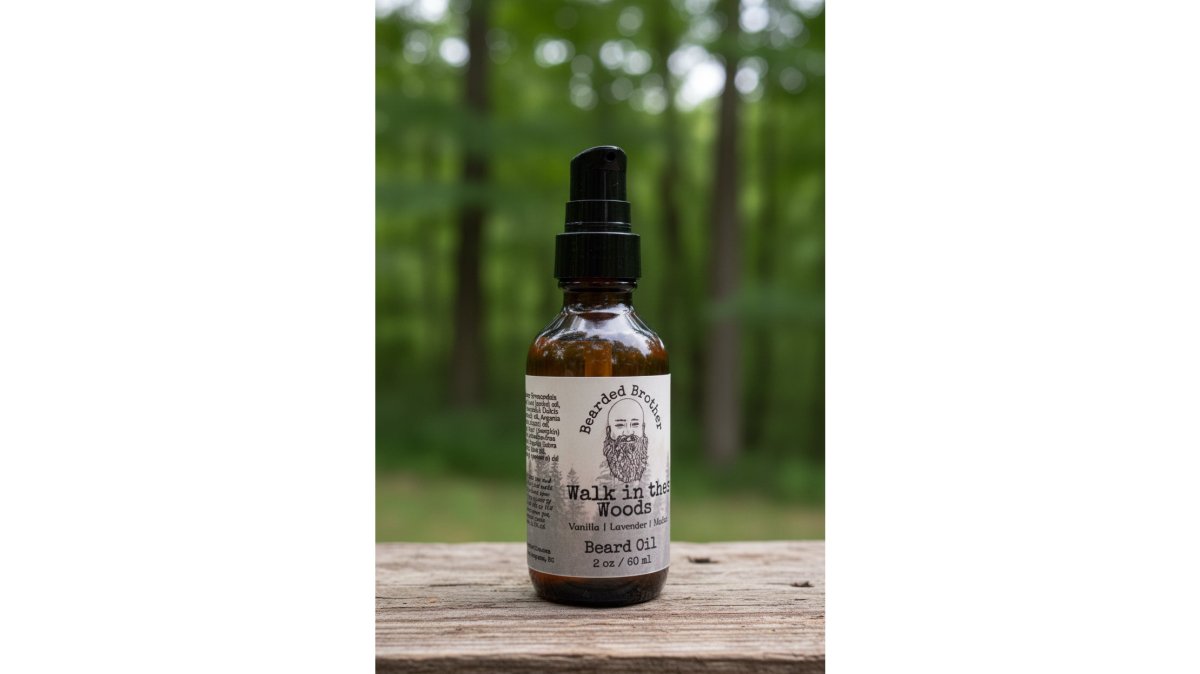
The best beard oil for sensitive skin is built around non-comedogenic carrier oils, no synthetic fragrance, and a short ingredient list. That combination calms the skin barrier instead of aggravating it. At Bearded Brother, we hear from guys every week who tried four or five drugstore oils before finding one that does not leave their face red and burning.

Beardruff, Itch, and Folliculitis: What's Actually Happening
Beardruff is flaking skin under the beard, caused mainly by dryness. Folliculitis is inflammation of the hair follicles, which shows up as small red bumps or tender spots.
Quick Comparison: Best Beard Oil for Sensitive Skin
Every option below comes from our own line, and each earns its place for a different reason.
Product |
Price |
Key Ingredients |
Best For |
|---|---|---|---|
$20.00 |
Jojoba, argan, sweet almond, avocado, vitamin E |
Daily barrier support, beardruff, itch |
|
$20.00 |
Shea butter, almond oil, beeswax, argan, jojoba |
Deep conditioning, coarse or thick beards |
|
$12.00 |
Bamboo extract, panthenol, sulfate-free |
Gentle cleansing without stripping |
|
Bare & Blessed Goat Milk Soap |
$7.00 |
Goat milk, colloidal oats, kaolin clay, no fragrance |
Washing a reactive face |
Mens Beard Care Gift Set |
$40.00 |
Beard oil plus beard butter |
Starting a sensitive-skin routine |
Start with the oil. Everything else builds on it.

Beard Oil Ingredients to Avoid When Your Skin Is Reactive
The fastest way to calm a reactive beard is to remove the ingredients causing the reaction. Two categories do most of the damage: comedogenic oils and synthetic additives.
Comedogenic Oils and Synthetic Additives
A short ingredient list beats a long one when your skin is reactive: fewer ingredients, fewer chances for a reaction.
Non-Comedogenic Beard Oil: Why Carrier Oils Matter
Carrier oils do the actual work in a beard oil, and why one calms reactive skin while another inflames it comes down to biology, not marketing.
How Sebum and Carrier Oils Interact
Your skin produces sebum, a waxy substance made mostly of triglycerides, wax esters, squalene, and fatty acids. It forms the outermost layer of your skin barrier, locking in water and keeping irritants out. When facial hair wicks moisture away and sebum can't keep pace, the barrier thins and reactive skin flares.
The Comedogenic Scale, Explained Simply
The comedogenic scale rates how likely an oil is to clog pores, from 0 (won't clog) to 5 (very likely). Jojoba, argan, and sweet almond sit at 0 to 2. Coconut sits at 4, wheat germ at 5, and heavy mineral oil is high enough that most dermatologists advise against it on facial skin. A non-comedogenic beard oil blends low-rated carrier oils so skin gets hydration without trapping sebum and bacteria in the follicle.
Why Cold-Pressed and Short Ingredient Lists Matter
A short ingredient list matters for a different reason: fewer ingredients means fewer chances for a reaction, and you can identify exactly what touched your skin if something goes wrong.
How to Apply Beard Oil Without Irritation
Applying beard oil correctly matters as much as which oil you choose. Most irritation comes from three mistakes: too much product, dry skin, and rubbing instead of massaging.
Here is the routine that works for reactive skin.
- Wash your beard with a gentle, sulfate-free shampoo and pat it dry. Leave it slightly damp.
- Place 1 to 4 pumps of oil in your palm and warm it between your palms and fingers.
- Massage it into the skin under your beard, not just the hair. Work it down to the roots.
- Comb or brush through to distribute evenly.
- If you notice flaky spots, use a little more oil there until they settle.
Patch Testing Protocol Before First Use
Patch testing is the step almost everyone skips, and it prevents a bad reaction. Here is how to do it properly.
- Apply a small amount of oil to the inside of your forearm, not your face.
- Wait 24 hours and check for redness, bumps, or itching.
- If clear, apply a small amount behind your ear or along your jawline.
- Wait another 24 hours.
- If both spots stay calm, apply to your full beard.
Bearded Brother's Sensitive-Skin Line: Pros, Cons, and Pricing
Our line exists because the guys in our family have reactive skin too. We built it around short ingredient lists and an unscented option on nearly everything.
What works:
- The Beard Oil at $20.00 pairs jojoba, argan, sweet almond, avocado, and vitamin E, all low on the comedogenic scale.
- The Beard Butter at $20.00 adds shea butter and beeswax for coarse or thick beards that need hold and deeper conditioning.
- The Shampoo Hair and Beard at $12.00 is sulfate-free and gentle enough for daily use.
- The Bare & Blessed Goat Milk Soap at $7.00 skips colorants and fragrance entirely, with colloidal oats and kaolin clay to soothe.
- Unscented versions are available across the range, so you are not stuck choosing between smelling good and avoiding a reaction.
Where it falls short:

- We are not the cheapest option on the shelf. A $20.00 oil costs more than a drugstore bottle.
- The butter is rich. If your beard is short and fine, the oil alone is enough and the butter may feel heavy.
- We are a small family operation, so stock on specific scents moves fast.
Building a Routine for Rosacea and Reactive Skin
Rosacea, eczema, and seborrheic dermatitis each change how your skin responds to oils, cleansing, and environment, and a routine that calms one can aggravate another. The goal is subtraction, not addition: every product you add is another chance to trigger a flare.
Matching the Routine to the Condition
Rosacea causes facial redness, flushing, and visible blood vessels. Heat, sun, spicy food, alcohol, and harsh skincare are common triggers. For rosacea-prone skin under a beard, avoid anything that raises skin temperature or strips the barrier: fragrance-free, alcohol-free, and short ingredient lists are non-negotiable. Apply oil to damp skin to reduce friction, and keep the beard short enough that air reaches the skin.
How Climate, Humidity, and Water Affect Sensitive Skin
Most guides ignore environment, but it changes what your skin needs week to week.
The Four-Step Baseline Routine
Start here, then adjust for condition and climate.
- Wash with a fragrance-free, gentle cleanser such as goat milk soap. In hard water, rinse thoroughly or use filtered water.
- Condition with a sulfate-free shampoo and conditioner to keep beard hair soft.
- Apply unscented beard oil to damp skin, massaging it into the skin under the beard, not just the hair.
- Add beard butter only if your beard is thick enough to need it or your skin is dry. Skip it if you live in high humidity.
Adjust frequency with the seasons. Twice daily in dry winter air, once daily in humid summer.
Frequently Asked Questions
What beard oil is best for sensitive skin?
The best beard oil for sensitive skin uses non-comedogenic carrier oils like jojoba, argan, sweet almond, avocado, and grapeseed, and skips synthetic fragrances and essential oils that trigger reactions. Bearded Brother's Beard Oil combines jojoba, argan, sweet almond, avocado, and Vitamin E in a 2 oz bottle for $20, and it comes in an unscented version for anyone who reacts to fragrance. Patch test any new oil on your inner forearm for 24 to 48 hours before applying it to your face.
What ingredients should I avoid in beard oil if I have sensitive skin?
Skip synthetic fragrances, parabens, sulfates, and heavy essential oil blends, which are common triggers for irritation and folliculitis. Watch for comedogenic carrier oils that clog pores and worsen acne along the jawline. Bearded Brother's Beard Oil uses jojoba, argan, sweet almond, avocado, and Vitamin E, and the brand sells an unscented option if fragrance is your main trigger. Check labels for the full ingredient list rather than trusting front-of-bottle claims.
What is the best beard oil that won't cause acne?
Look for non-comedogenic beard oil built on jojoba or argan, since these absorb without sitting heavy on the skin and clogging pores. Apply to the skin under the beard rather than the hair itself, and use 1 to 4 pumps, not more. Bearded Brother's Beard Oil lists jojoba, argan, sweet almond, avocado, and Vitamin E, and the 2 oz bottle costs $20. If breakouts continue, cut back to once daily and cleanse with a sulfate-free shampoo.
How often should you apply beard oil to sensitive skin?
Start with once daily, ideally after a shower when your beard is clean and slightly damp, since damp skin absorbs oil more evenly. If your skin tolerates it well after two weeks, you can add a second application. Bearded Brother's directions call for 1 to 4 pumps warmed between the palms and massaged into the skin under the beard, then combed through. If flaky spots appear, apply a little more oil to those areas until they clear.
Can beard oil help with beardruff and itching?
Beardruff usually comes from dry skin under the beard, so a moisturizing oil can reduce flaking and itch when applied consistently. Bearded Brother's Beard Oil is formulated for beardruff, dry spots, and itchy beards, and the directions suggest combing out dry flakes before applying oil and using extra on flaky areas. Pair it with a sulfate-free shampoo and a beard butter. If itching persists past a few weeks, see a dermatologist.